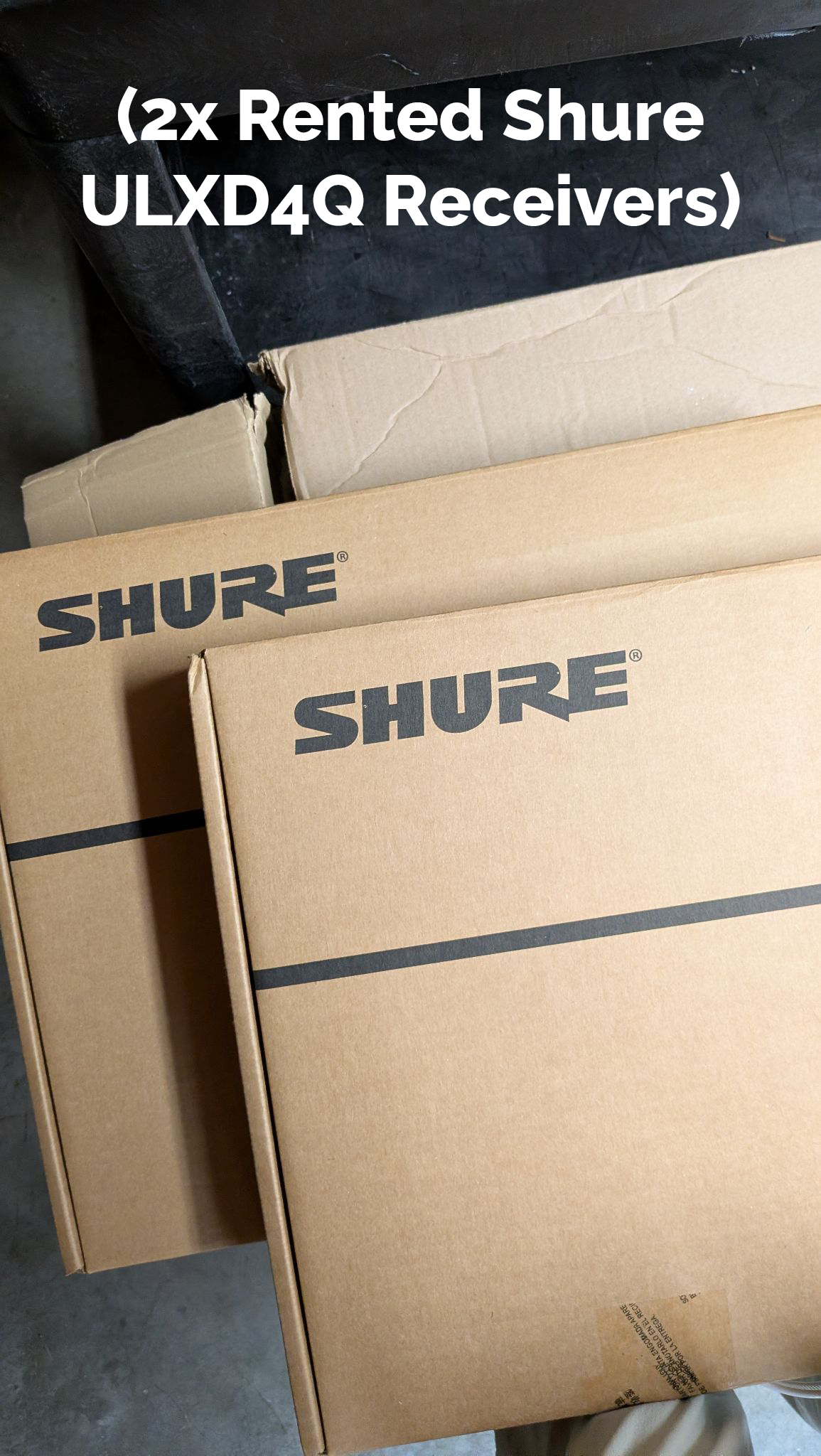
Due to the large number of characters that must be on stage at a given time during this show, we rented 8 Shure ULX-D body packs/rack units (below), which were used in tandem with 7 of our own mics to mic all solo actors.
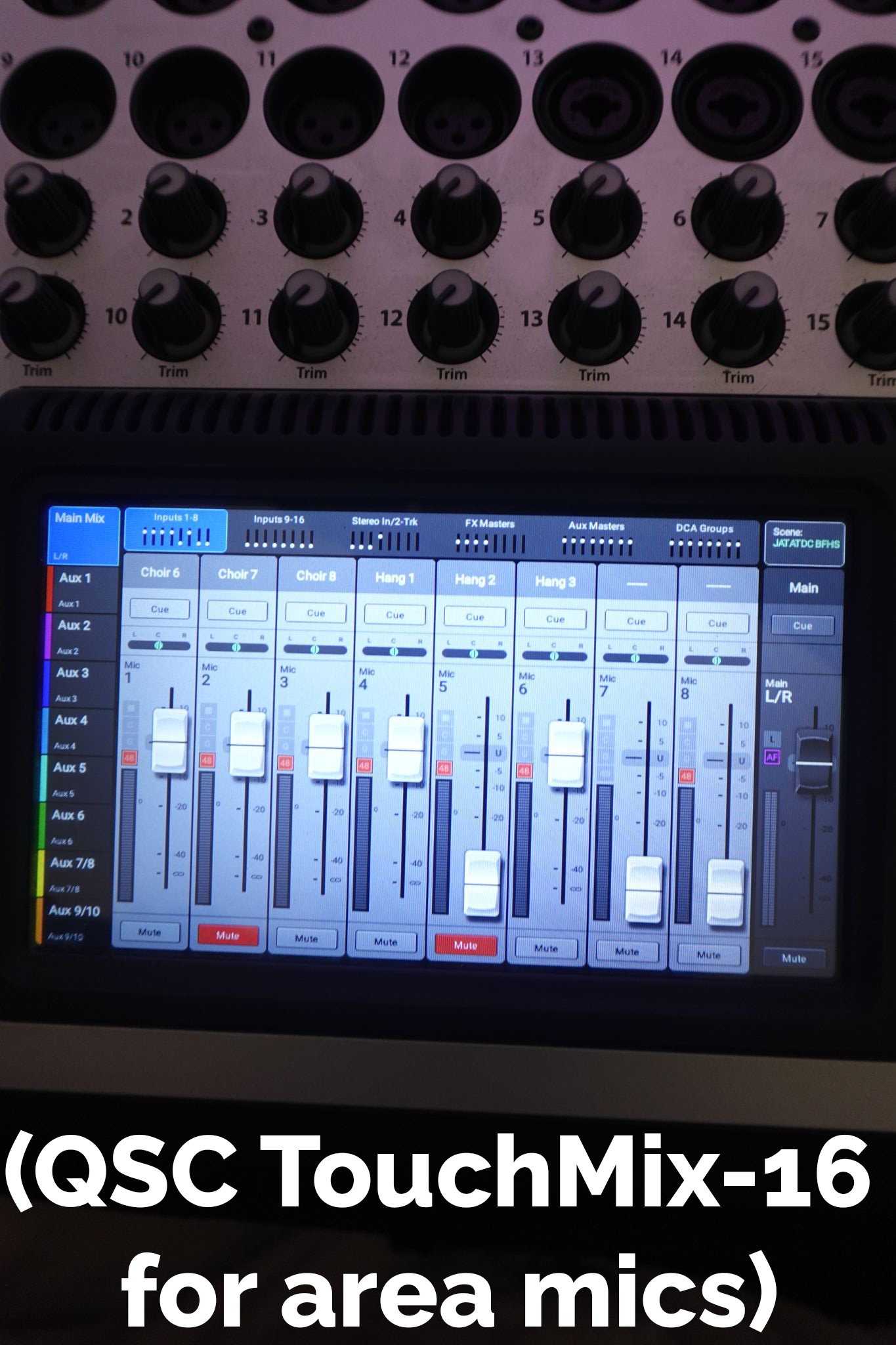
I set up these mics with our sound system, and solved the issue of not having enough inputs on our digital snake by running our 6 area mics through a QSC Touch Mix-16 (shown below), which was then plugged into our snake.
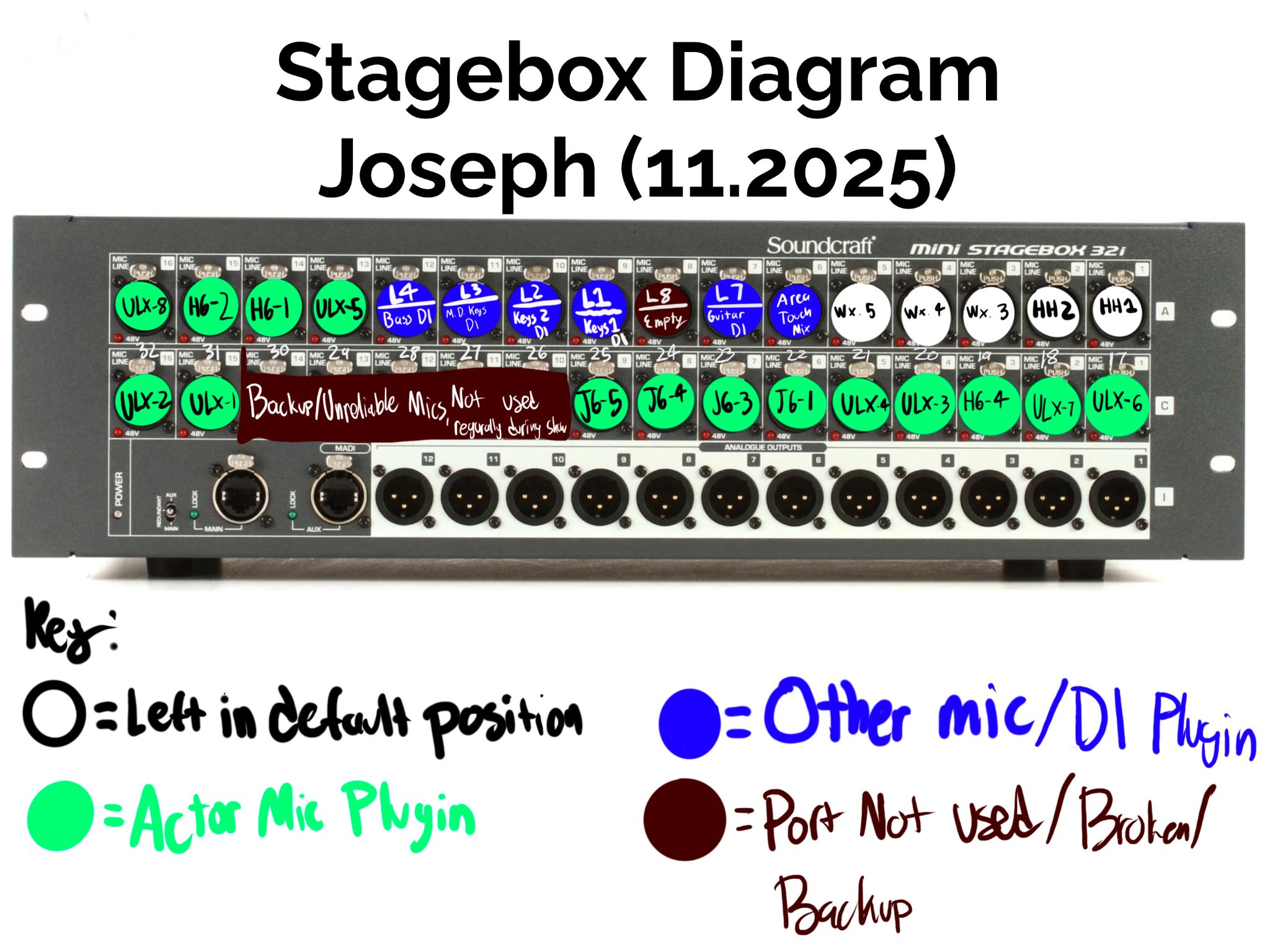
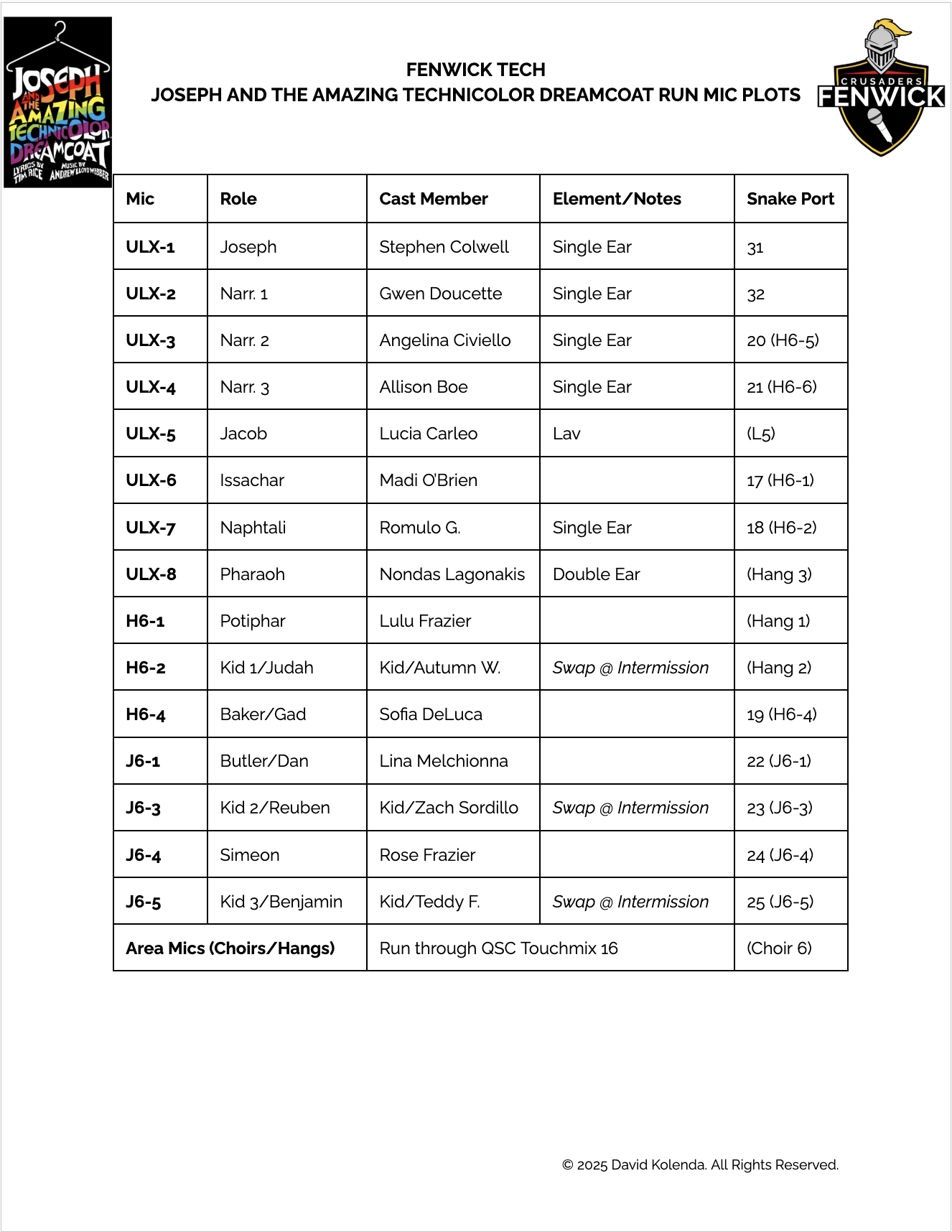
Information on where to plug inputs in is conveyed in my stagebox diagram (left), and all of this, and other information is conveyed in my full mic plot (right)
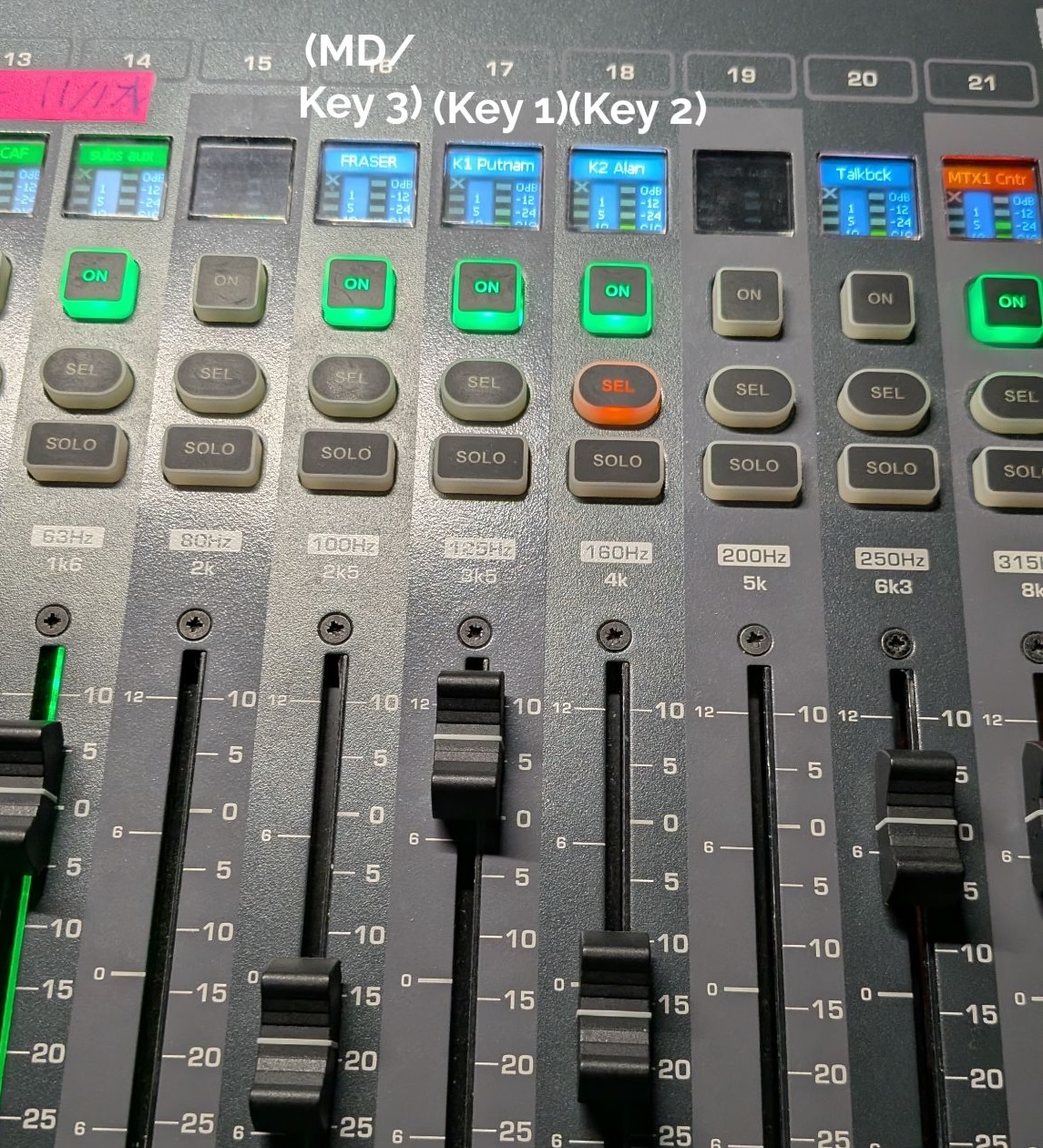
To manage this large amount of mics, I once again used our board’s offline layout editor to easily work with all actor mics, as well as keyboards from the live orchestra that I incorporated into the house mix. VCAs were also used to help mix large ensembles such as the narrators and brothers.
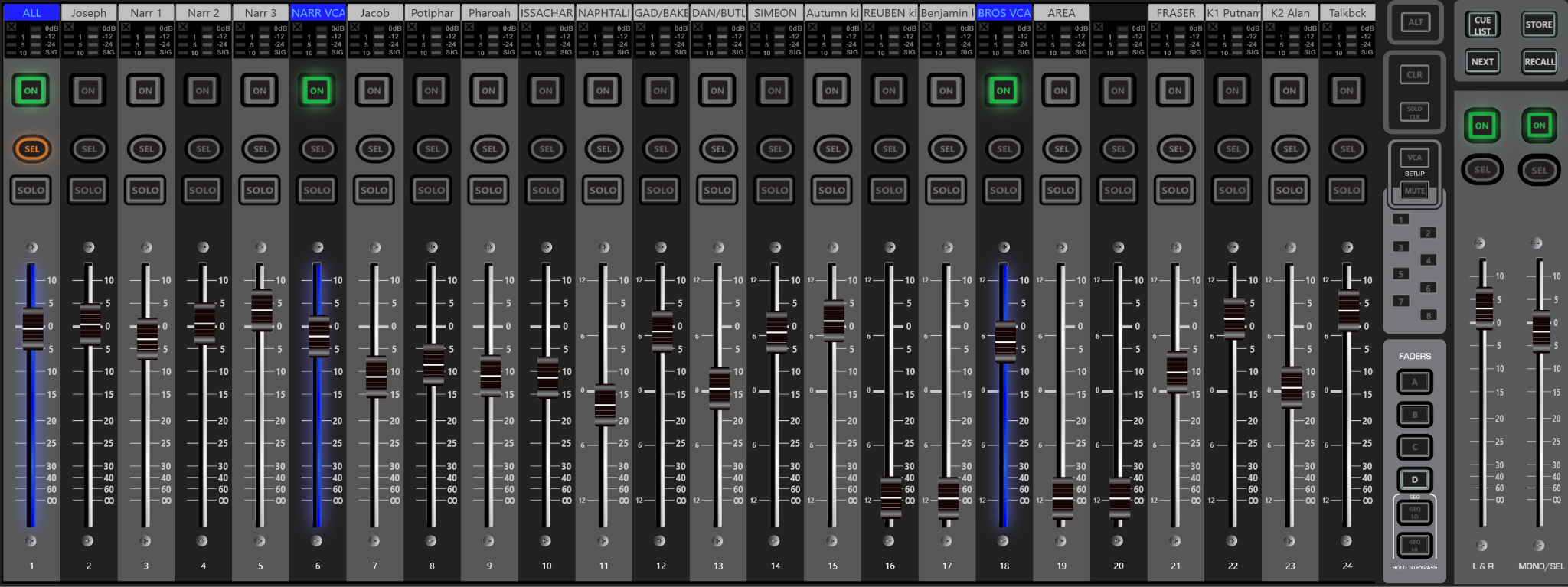
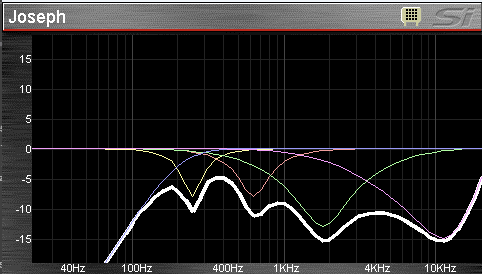
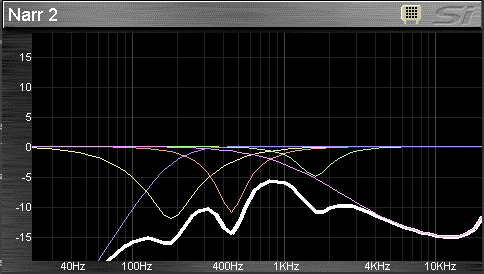
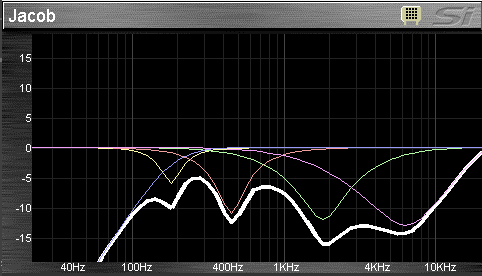
I also EQd all mics to ensure all singing was clear and feedback free.
Additionally to help with mixing, I also created a cue sheet to manage what mics were on when. This cue sheet was transferred into the board’s cue list.
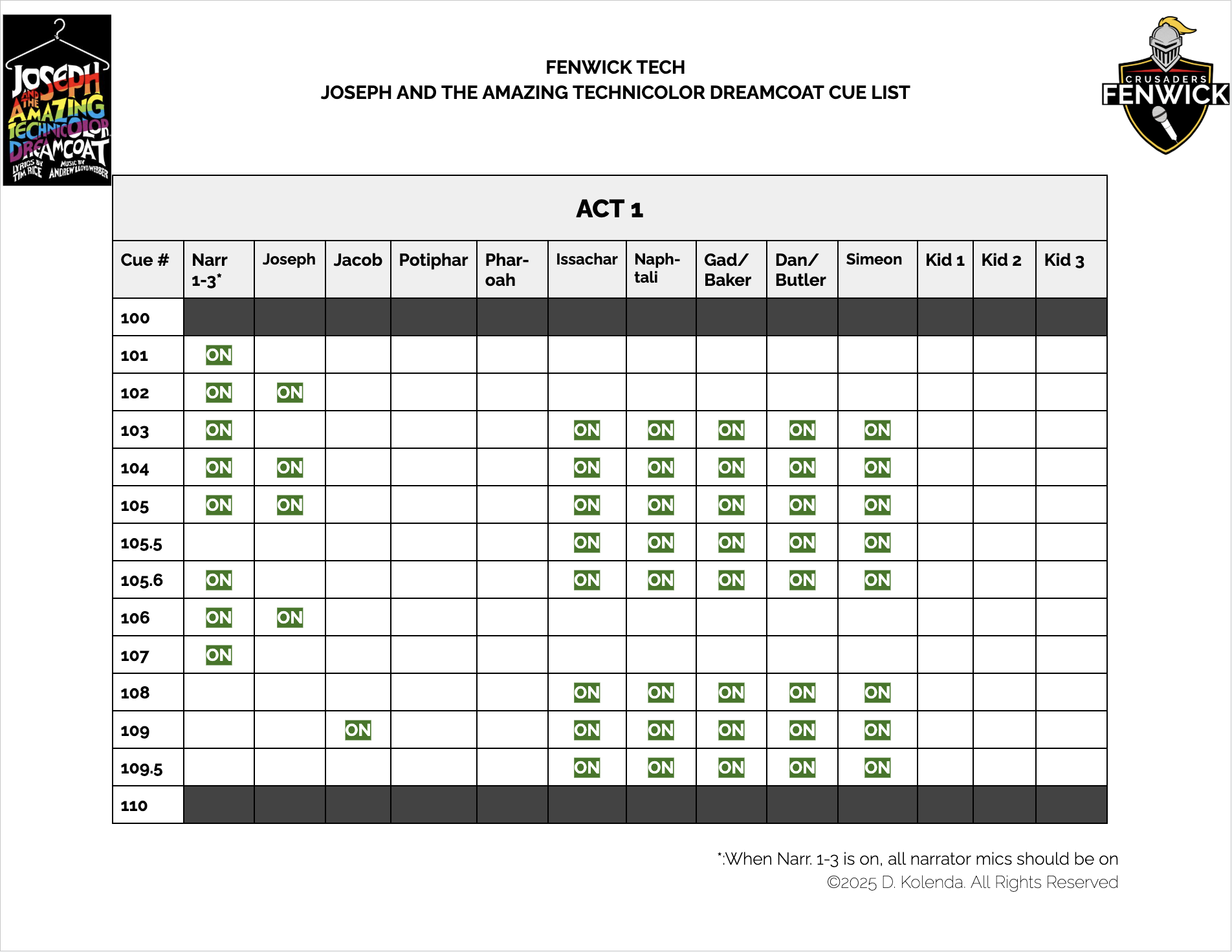
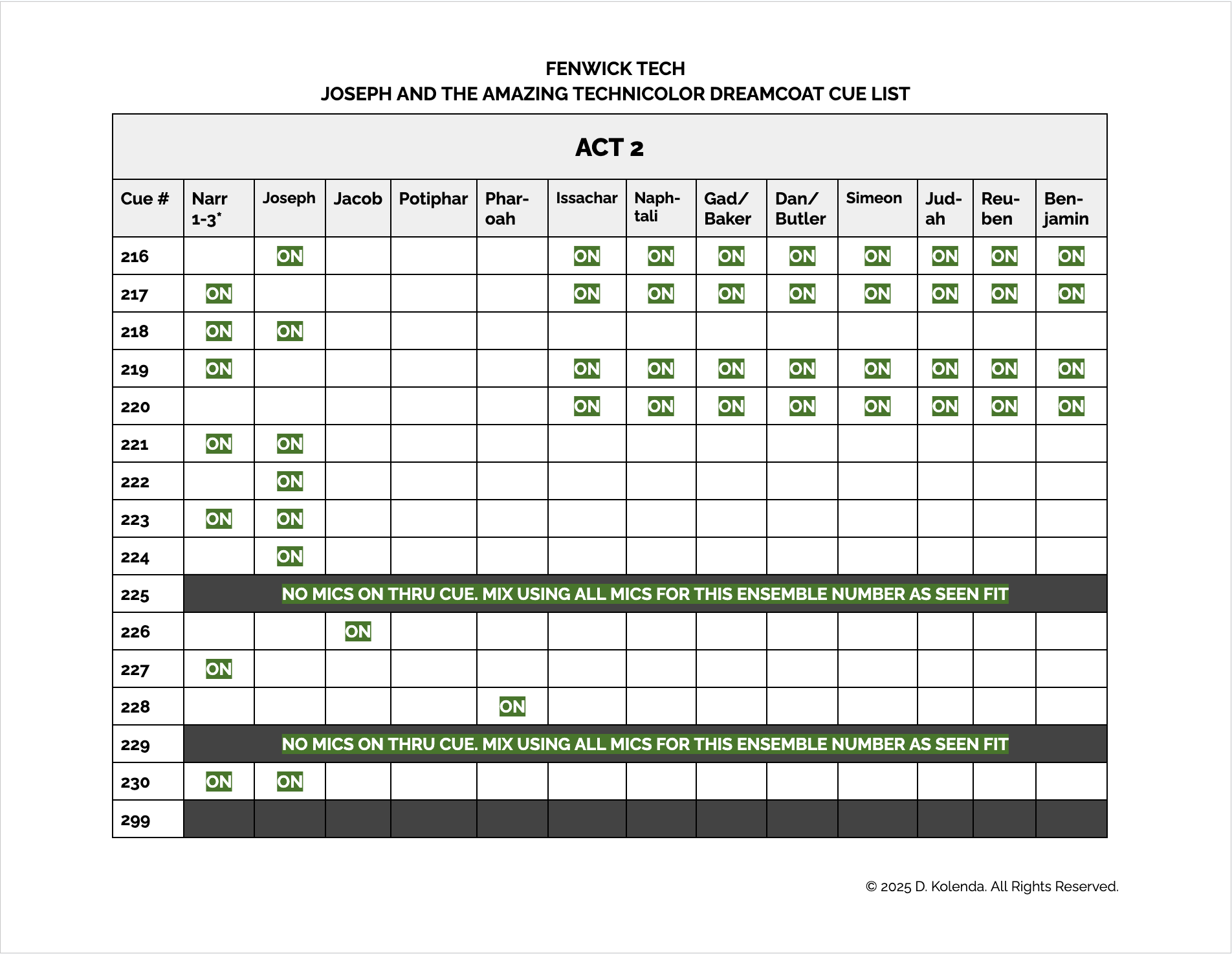
All cues and other notes were written into a script, so that the Assistant Sound Designer could call cues.
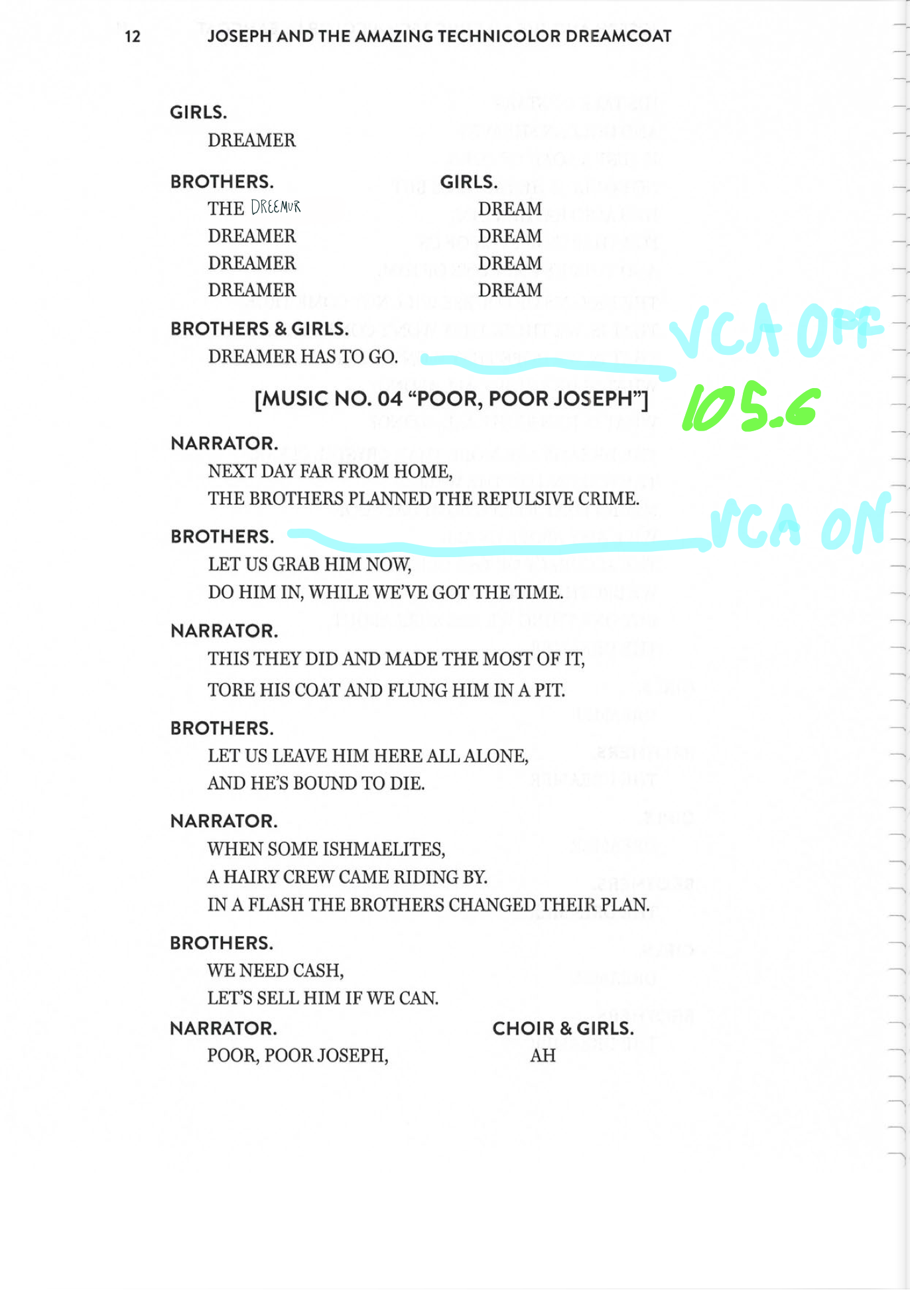
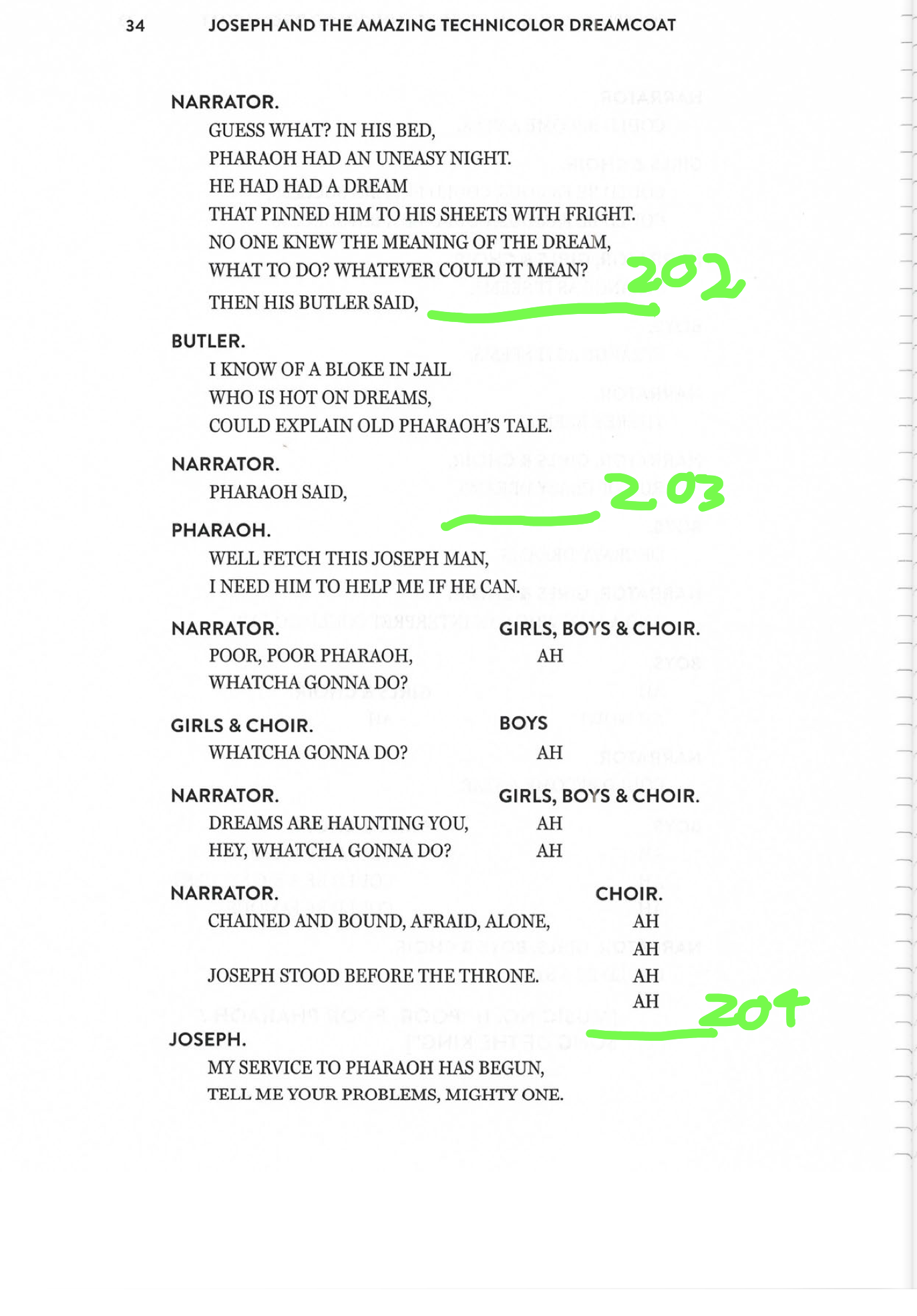
Joseph featured a live orchestra in the pit. However, due to the acoustics of the space, I decided that it would be best to not mic any instruments, but only use DI-boxes to run the three keyboards through the house PA.
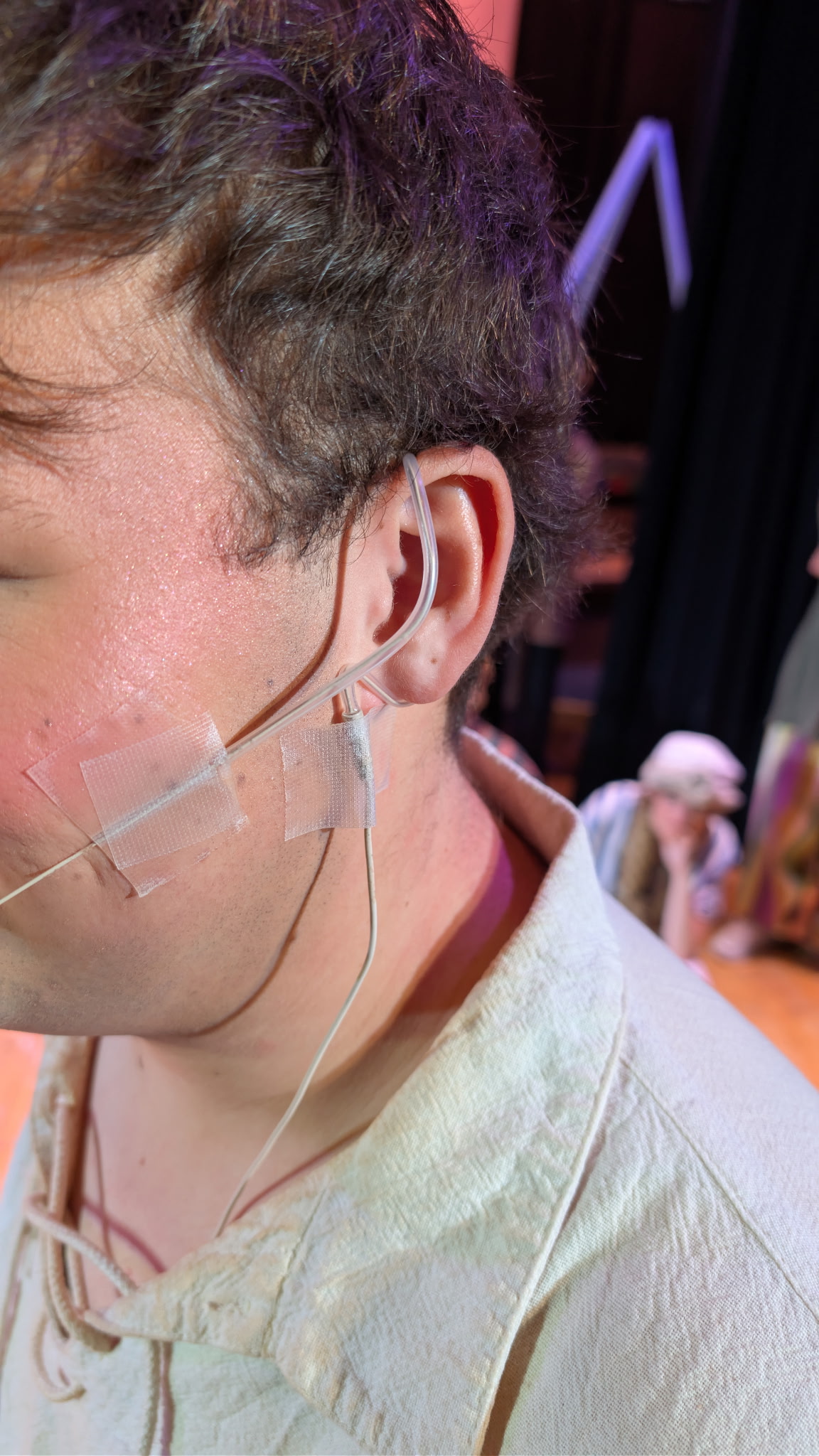
Most actors wore single-ear microphones, however, some others wore a lavalier microphone if they needed to switch mics with another actor, or the actor was not able to wear an over-ear style microphone.
Judges' Notes/Comments can be read for my work on this production by clicking here.
A publicly avalible recording of this production is not avalible at this time, however, if you would like to view one, to obtain more previews of content shown here, or to download any resources shown, you may Contact Dave.
© D. Kolenda
Except where otherwise noted, content on this website is licensed under CC BY-SA 4.0. To view a copy of this license, visit https://creativecommons.org/licenses/by-sa/4.0/
No generative AI was used when creating this website